Project Overview
A Failed Valve Assembly Became an Upgrade Instead of a Replacement

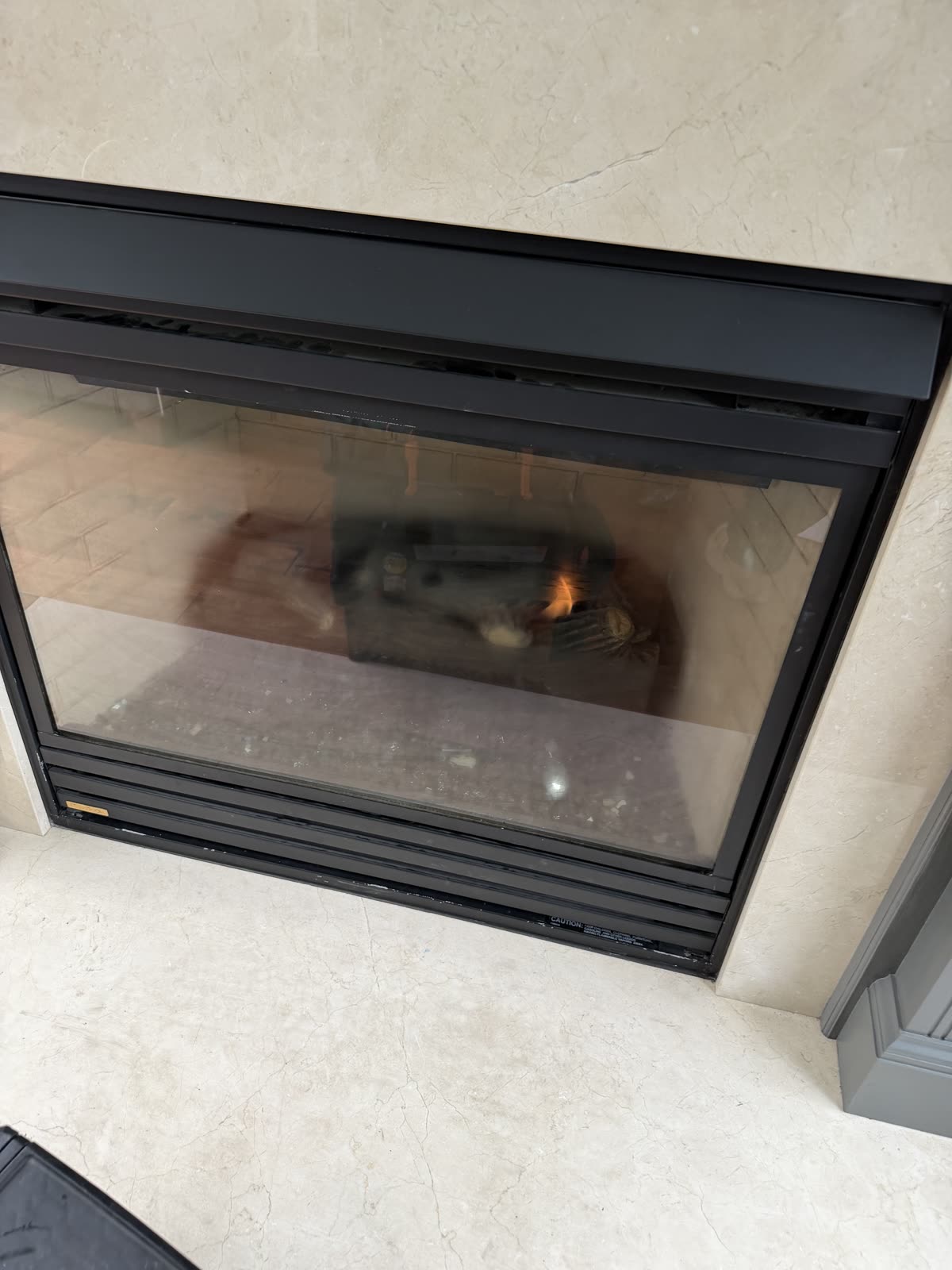
This customer had an older direct-vent gas fireplace running on a millivolt system. That design uses a standing pilot — a small flame that burns continuously, year round — and it has to be lit by hand with an igniter every time the pilot goes out. It is a dependable design, but it is dated, and it gives the homeowner very little control.
The fireplace had stopped working. After a thorough inspection, the failed component turned out to be the gas valve assembly itself. He had already been quoted roughly $10,000 to remove and replace the entire insert.
Replacing the valve alone would have put a new part into an aging manual system and left him exactly where he started. Once we walked through what a modern IPI system does differently, he decided to convert the fireplace instead: a new valve assembly, a new pilot assembly, a new control module, and a remote with thermostat control. The insert never came out of the wall.
Been Quoted for a Full Fireplace Replacement?
A failed valve or ignition component does not automatically mean the insert has to be replaced. Have the system properly evaluated first.
What We Found
- A gas valve assembly that had failed and could not be relied on
- A standing-pilot millivolt design requiring manual ignition
- A pilot assembly well into the end of its service life
- A firebox, venting and cabinet that were all still perfectly sound
- A replacement quote of roughly $10,000 to swap out the entire insert
Getting to the Actual Fault
An intermittent gas fireplace can look like a dozen different problems from the outside. The log set and burner came out first so the gas valve and controls underneath could be tested directly rather than guessed at from the front of the appliance. On a millivolt system the valve does the thinking — the standing pilot heats a thermopile, and the small voltage that generates is what holds the valve open — so when the valve itself fails, no amount of work on the pilot side will bring the fireplace back.

The Original Pilot Assembly
The pilot assembly came out with it. After years of service the assembly was corroded and at the end of its usable life, and on a conversion of this kind it is replaced as a matter of course rather than reused alongside new components.

Millivolt vs. IPI
Why the Customer Chose to Convert
A millivolt system keeps a pilot flame burning every day of the year, including through the summer, and generates its own power from that flame. An IPI system — intermittent pilot ignition — lights the pilot electronically only when the fireplace is asked to run, and shuts it off completely afterward.
For this customer that meant three practical differences: no pilot flame burning gas when the fireplace is not in use, no lighting anything by hand, and a remote with thermostat control so the fireplace can hold a set temperature in the room rather than simply being on or off.
Because the conversion replaces the valve, the pilot assembly and the control module together, the whole gas system ends up new and matched, rather than a new part working alongside older ones.
Ready to Schedule?
Schedule online or call 314-334-1554 to speak with a fireplace and chimney specialist.
The New Gas System
The New Valve Assembly
The replacement valve assembly is shown below during installation, with its leads labelled before they were connected. On a conversion like this the valve, the pilot assembly and the control module all go in together, so the ignition side of the fireplace ends up new and matched rather than a single new part working alongside older ones.

The New System
With the new valve assembly, pilot assembly and control module installed and the media reset, the fireplace was lit and tested before the glass went back on. Running it with the front glass off is how the flame pattern gets checked properly — the burner should carry an even flame across its full length, and the ember bed should light the way it is meant to.

Cleaning the Glass
The front glass was cleaned before it went back on. Gas fireplace glass builds a haze over time from normal combustion, and it is the part of the appliance a homeowner actually looks at every day. Putting dirty glass back over a brand new gas system would have undercut the whole job.
The Finished Result
The customer kept his existing fireplace and avoided a five-figure replacement, and he ended up with a better system than the one that failed — electronic ignition, no standing pilot burning gas year round, and thermostat control from a remote.
When a Gas Conversion May Be an Option
- The firebox, venting and cabinet are still sound
- The fault is in the valve, pilot assembly or control module rather than the appliance itself
- The existing system is millivolt or standing-pilot and the homeowner wants electronic ignition
- A full insert replacement has been recommended without the components being properly evaluated
Get the System Evaluated Before Replacing It
Before spending thousands replacing a gas fireplace, have the valve, pilot assembly and control module properly evaluated. In many cases the system can be rebuilt or upgraded in place. Get a second opinion from AirPlease Missouri Chimney Services.