Before & After


Project Overview
This chimney showed advanced masonry deterioration that had progressed beyond a simple tuckpointing or surface-repair project. The upper brickwork contained cracked and deteriorated masonry, failed mortar joints, previous patching, and areas where the brick structure had lost its integrity.
When deterioration reaches this level, continuing to patch individual joints does not correct the underlying problem. The appropriate repair is to carefully dismantle the unstable masonry back to a solid, serviceable section and rebuild the chimney with properly laid brick and new mortar.
Get an Estimate
Call 314-334-1554 or schedule online. Sun-Fri, 7:00 AM-8:00 PM.
What We Found
- Cracked, deteriorated and weathered brick throughout the upper chimney
- Open and failed mortar joints that could allow additional moisture penetration
- Loose and damaged masonry that could no longer be reliably repaired in place
- Previous patching that did not restore the structural integrity of the brickwork
- Deterioration around the chimney termination and top courses
- An overall condition where selective repairs would have left compromised masonry in service

Why a Full Rebuild Was Important
A masonry chimney is exposed to some of the harshest conditions on the home. Rain and snow saturate the exterior, while seasonal temperature changes repeatedly expand and contract the masonry. Once water enters cracks and deteriorated mortar joints, freeze-thaw cycles can accelerate brick and mortar failure.
When the upper portion of a chimney becomes severely deteriorated, loose masonry can continue to shift and break apart. Water can also move deeper into the chimney system and surrounding structure. A full rebuild removes the compromised material instead of hiding it behind another temporary patch.

The Rebuild Process
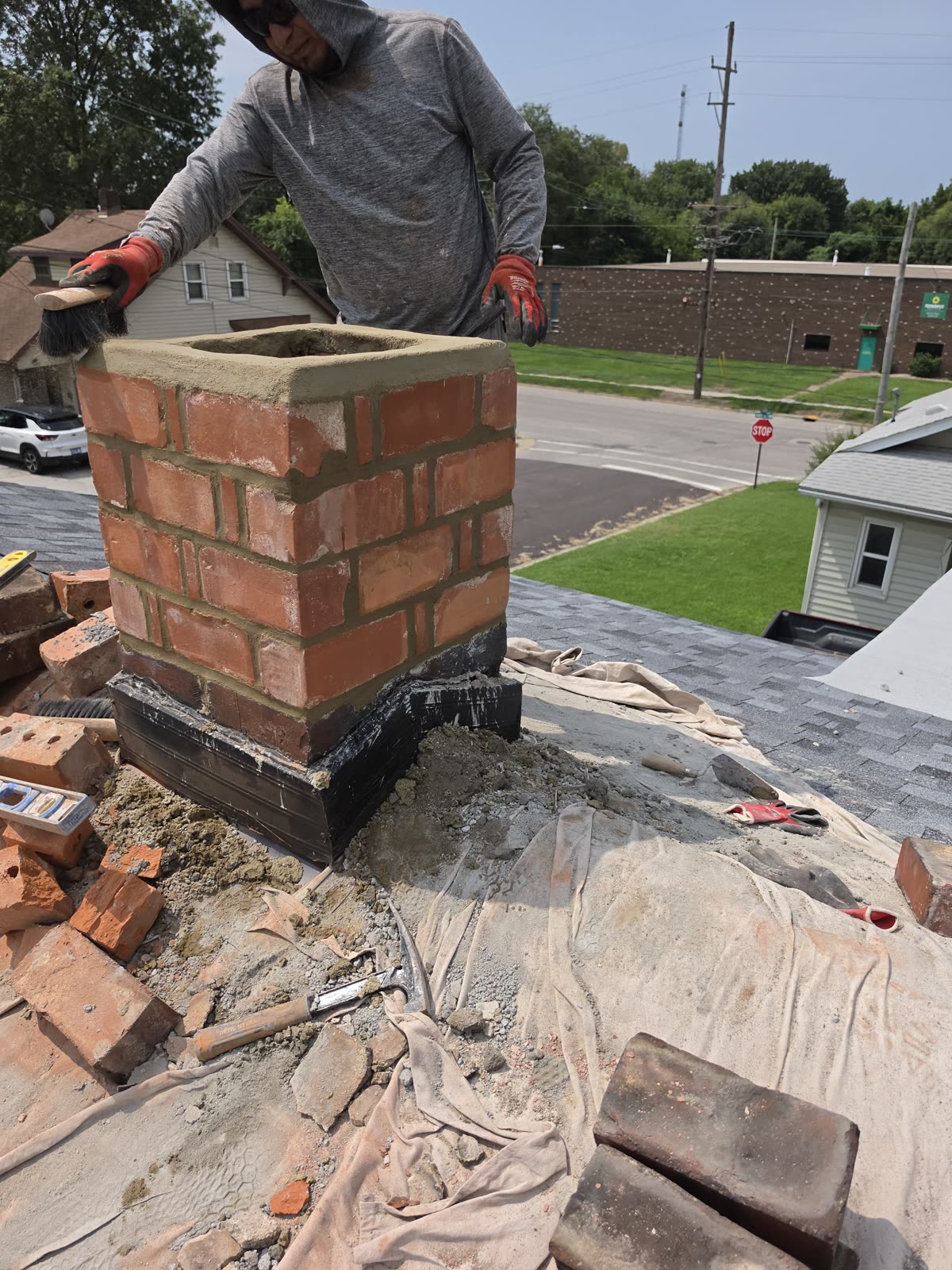
The damaged masonry was carefully dismantled course by course until a stable section of the existing chimney was reached. The work area and surrounding roof were protected during demolition, and deteriorated brick and mortar were removed from the roof as the project progressed.
- Careful demolition of the deteriorated upper chimney
- Removal of loose brick, failed mortar and previous repair material
- Evaluation of the remaining masonry before reconstruction
- Rebuilding the chimney with sound brick and fresh mortar
- Maintaining proper alignment and consistent mortar joints during reconstruction
- Reconstruction of the chimney termination area
- Installation of a protective chimney cover/cage at the completed termination
- Final cleanup of the work area and roof

Why Rebuilding Is Different From Tuckpointing
Tuckpointing is an excellent repair when the bricks remain sound and deterioration is primarily limited to mortar joints. A rebuild is different. It is used when the masonry units themselves, the bond between courses, or a significant portion of the chimney has deteriorated to the point that replacing mortar alone will not restore the chimney.
The goal is not simply to make the chimney look better. The goal is to remove compromised masonry and restore a solid, properly constructed chimney section that can better withstand continued exposure to the weather.
Deteriorated Chimney Masonry?
AirPlease Missouri Chimney Services can inspect the chimney, document the condition of the masonry and determine whether tuckpointing, selective brick replacement or a rebuild is the appropriate repair.
Project Progress
These photographs show the chimney during demolition and reconstruction. They are useful for the website because customers can see that a true chimney rebuild involves much more than applying mortar over the outside.


The Finished Result
After reconstruction, the chimney has new, properly laid masonry in place of the deteriorated upper section. The finished termination is protected with a metal chimney cover/cage while maintaining an open, functional termination area.

When a Chimney May Need to Be Rebuilt
- Bricks are loose, cracked, spalling or breaking apart
- Mortar joints are deeply deteriorated throughout multiple courses
- The chimney is leaning, separating or visibly unstable
- Large sections have been repeatedly patched without solving the problem
- Water damage has caused widespread masonry deterioration
- The upper chimney can no longer be restored reliably with selective brick replacement and tuckpointing
Get an Estimate
AirPlease Missouri Chimney Services can inspect the chimney, document the condition of the masonry and determine whether tuckpointing, selective brick replacement or a rebuild is the appropriate repair.